What my harness can NOT guarantee
Published on November 3, 2026
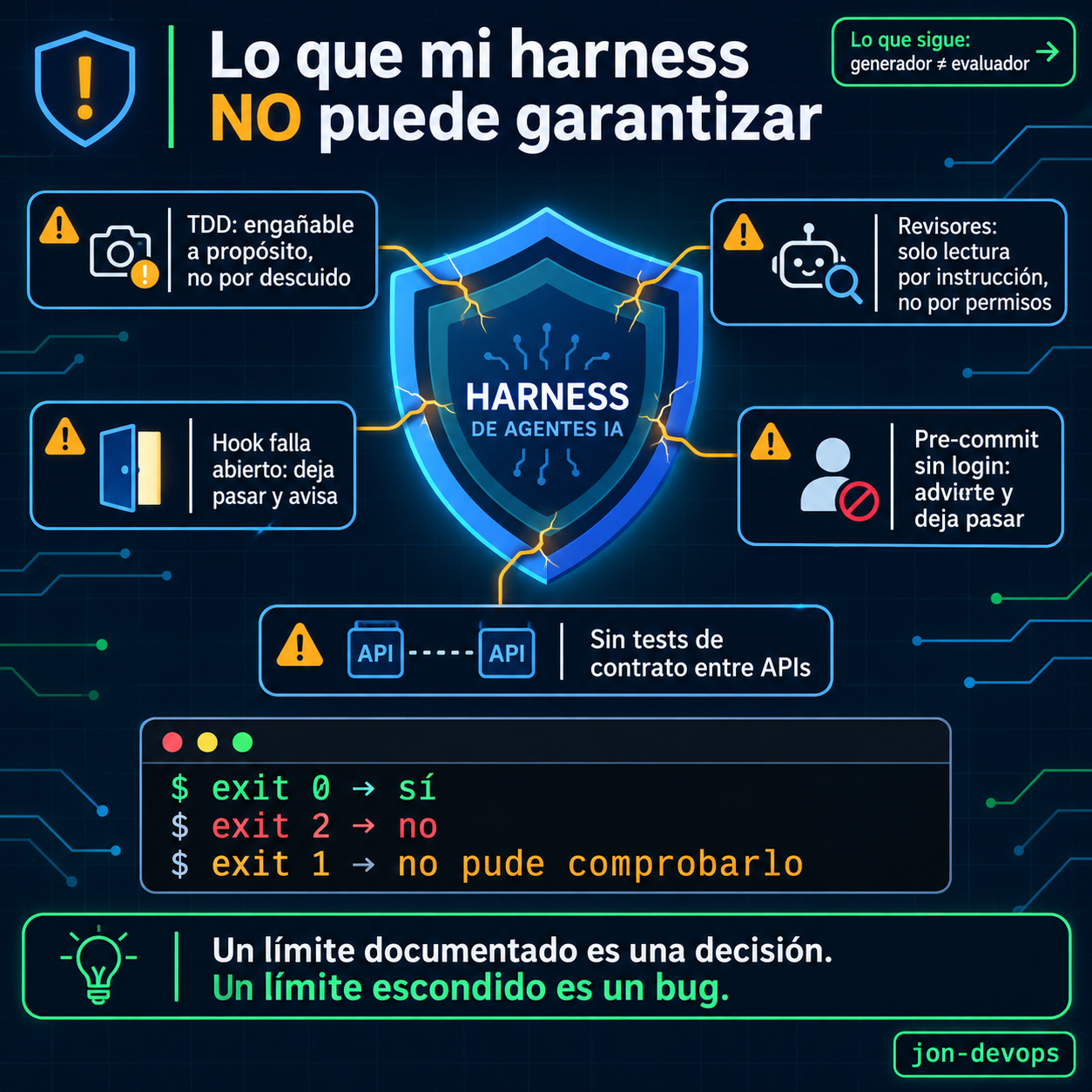
𝗪𝗵𝗮𝘁 𝗺𝘆 𝗵𝗮𝗿𝗻𝗲𝘀𝘀 𝗰𝗮𝗻 𝗡𝗢𝗧 𝗴𝘂𝗮𝗿𝗮𝗻𝘁𝗲𝗲
Four posts telling you what my agent harness does… and today I owe you the other half: what it doesn't do 😅 Because a system that claims to guarantee everything is lying.
While I was building it, I made a decision: every limitation would be written down in the docs. Not hidden, not "for later". Written. Here are some:
→ 𝗧𝗗𝗗 𝗶𝘀 𝗻𝗼𝘁 𝘂𝗻𝗳𝗮𝗸𝗲𝗮𝗯𝗹𝗲: if someone wants to fool the engine on purpose, they can. What changed is that the shortcut no longer happens by accident: it has to be deliberate
→ 𝗧𝗵𝗲 𝗿𝗲𝘃𝗶𝗲𝘄𝗲𝗿𝘀 are read-only by instruction, not by permissions. I trust the design, but I don't sell it as a guarantee
→ 𝗧𝗵𝗲 𝗵𝗼𝗼𝗸 𝘁𝗵𝗮𝘁 𝗽𝗿𝗼𝘁𝗲𝗰𝘁𝘀 𝘁𝗶𝗰𝗸𝗲𝘁 𝘀𝘁𝗮𝘁𝗲 𝗳𝗮𝗶𝗹𝘀 𝗼𝗽𝗲𝗻: if something unexpected breaks it, it lets things through and warns. Failing closed, a format change could block the entire repo
→ 𝗣𝗿𝗲-𝗰𝗼𝗺𝗺𝗶𝘁 𝘄𝗶𝘁𝗵𝗼𝘂𝘁 𝗹𝗼𝗴𝗶𝗻: if the dev has no active AI session, it warns and lets the commit through. It was a rollout decision so the team wouldn't get stuck
→ 𝗧𝗵𝗲𝗿𝗲 𝗮𝗿𝗲 𝗻𝗼 𝗰𝗼𝗻𝘁𝗿𝗮𝗰𝘁 𝘁𝗲𝘀𝘁𝘀 between the two APIs. That's why the plan reviewer checks whether each criterion can actually be tested
What I learned 💻
→ A documented limitation is a decision. A hidden limitation is a bug waiting for its moment
→ My engine has three answers: yes, no and "I couldn't verify it". That third one exists so doubt never gets resolved by letting things through
→ And a check that's always red teaches you to ignore all the others. That's why I'd rather have an honest gate than one that just makes noise 🔥
What's next? More autonomous agents, with the generator ≠ evaluator pattern. But that's another story 🚀
With this post I close the series about my agent harness. Thanks for reading, commenting and sharing every part 💪
Do you document the limitations of your systems, or only what works? Tell me 👇
Keep flying, Champions! ✈️